

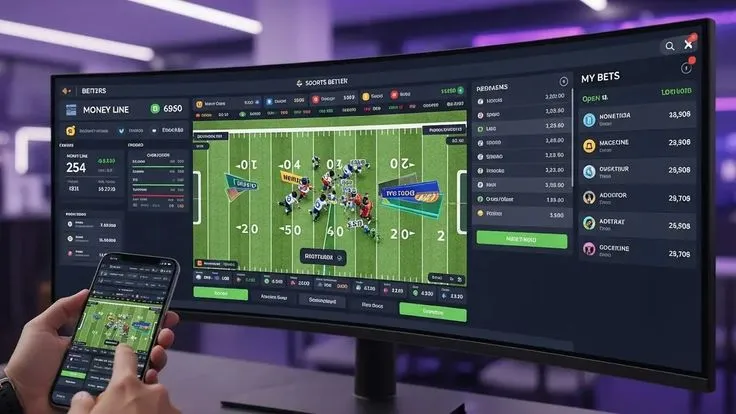
Sportsbooks do not accept every wager at any amount. Someone exploring Online Sports Betting Malaysia may see different maximum stakes across football, tennis, basketball, esports, and other markets, even when the same account is being used. These limits are part of how a sportsbook manages exposure, market liquidity, and potential payouts. A displayed maximum is therefore an operating boundary rather than a suggestion about how much someone should bet. Understanding the difference between stake limits, payout limits, and market-specific controls helps users interpret betting restrictions more clearly.
Why Markets Have Limits
Every betting market carries a different level of uncertainty and potential financial exposure for the operator. A major football match with heavy trading activity may support larger stakes than a small event with limited information.
Sportsbooks use limits to control how much risk can accumulate on one outcome. The number can vary according to sport, competition, market type, timing, and current exposure. One universal maximum across every event would not reflect those differences.
Maximum Stake vs Maximum Payout
A maximum stake is the largest amount the sportsbook will accept on a particular wager. A maximum payout is different: it places a ceiling on how much can be returned from a winning bet.
Someone browsing OK88 may therefore need to distinguish between the amount allowed at placement and the amount that could ultimately be paid. A large stake does not always mean an unlimited return, especially when a market or account is subject to separate payout conditions.
Main Markets Often Take More
Popular markets such as football match winner, major handicaps, or full-game totals can sometimes support larger stakes because they attract more betting activity and have deeper pricing information.
Specialized markets may be more restricted. A niche player prop, lower-division match, or unusual in-play selection can carry a smaller maximum because there is less market depth or greater uncertainty around the available data.
Live Limits Can Change Quickly
In-play markets are constantly repriced as the event develops. The maximum accepted stake can change at the same time because the sportsbook’s exposure and confidence in the current price are also changing.
A market that accepted a larger amount before kickoff may allow less after a red card, injury, or other major event. The reduction does not necessarily mean there is a problem with the account; it can simply reflect the new market state.
Odds Affect Exposure
Two wagers with the same stake do not create the same potential liability. A short-priced favorite produces a smaller possible return than a long-priced selection at much higher odds.
For that reason, sportsbooks can consider both stake size and potential payout when setting limits. A lower permitted stake on a high-odds market may be designed to keep the possible return within the operator’s accepted exposure range.
Limits May Differ by Bet Type
Singles, parlays, same-game combinations, player props, and futures can all have different maximums. A sportsbook may also apply separate limits to promotional bets or markets with special payout structures.
Users should therefore check the specific bet slip rather than assuming the limit from one market applies elsewhere. The accepted maximum is usually tied to the exact wager being submitted at that moment.
Requested Stakes Can Be Reduced
When a requested amount exceeds the current limit, the sportsbook may reject the wager or offer to accept a smaller stake. The final confirmation should show what amount was actually placed.
This is similar to a requote in that the original request is not automatically the final transaction. Checking the accepted stake, odds, and potential return in the bet record prevents confusion after the market moves or closes.
A Limit Is Not a Target
The presence of a high maximum should never be read as a recommended stake. Sportsbook limits are designed around operator controls, not an individual’s financial circumstances.
Personal betting limits should be set independently and remain comfortably within an entertainment budget. The fact that a platform is willing to accept more money does not make a selection safer, more predictable, or more suitable for a larger wager.
Conclusion
Sportsbook controls can include maximum stakes, maximum payouts, market-specific limits, and dynamic restrictions that change as an event develops. Popular markets may support larger amounts, while niche or high-odds selections can be more tightly limited because the operator’s potential exposure is different.
These boundaries explain what the sportsbook is prepared to accept, not what a user should spend. Reading the final accepted stake and payout conditions gives a clearer picture of the wager, while personal limits should always be based on a fixed entertainment budget rather than the maximum shown on screen.
